
Dental implants
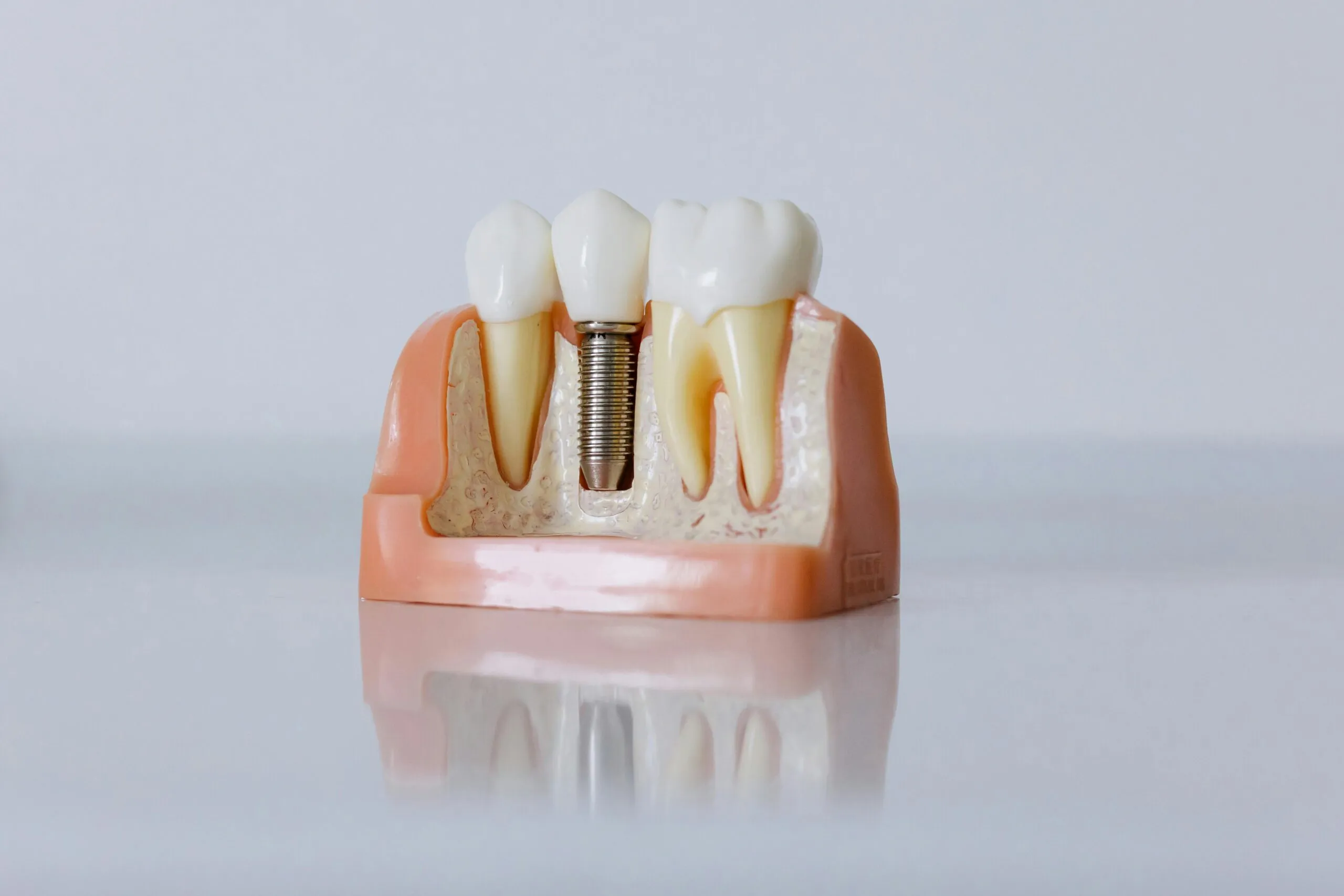
An implant is a titanium root placed into the jaw that takes over the job of the root you lost. A crown goes on top, and it looks and works like a natural tooth. Unlike a bridge, it leaves the neighbouring teeth untouched. Unlike a denture, it does not move and does not come out.
- Neighbouring teeth stay intact
- Stops bone loss in the jaw
- Lifespan measured in decades
- Planned from a 3D scan
Why an implant rather than a bridge or denture
When a tooth is lost, the bone underneath stops being loaded and starts to recede. It happens over years, and it shows — the cheek falls in and the neighbouring teeth begin to tilt into the gap.
An implant is the only option that returns load to the bone and stops that process. A bridge requires two healthy neighbouring teeth to be ground down. A removable denture rests on the gums and gradually stops fitting as the ridge changes shape.
How treatment runs
Planning. Examination, scan, and assessment of how much bone is available and of what quality. The position and size of the implant are decided before anything is done.
Placement. A procedure under local anaesthetic, roughly half an hour per implant.
Integration. Three to six months while the implant fuses with the bone.
The crown. Impressions and a crown matched to the shape and shade of your own teeth.
Coming from abroad
Send us photos and any scans you have and we will tell you, before you book a flight, whether an implant is realistic in your case, how many trips it needs and what it will cost. Implant treatment is the one case where the timing genuinely matters, so we plan the two visits around your travel rather than the other way round.
Frequently asked questions
How many visits does it take, and how far apart?
Two trips for most patients. The implant is placed on the first visit; the crown follows once the implant has fused with the bone, which takes three to six months and cannot be rushed. If the tooth is visible when you smile, you get a temporary solution in the meantime, so you are never left with a gap.
Is placing an implant painful?
It is done under local anaesthetic and takes around half an hour per implant. Most patients describe it as easier than having a tooth out. Some swelling and tenderness for a few days afterwards is normal and is handled with ordinary painkillers.
Am I a candidate?
Most adults are. What matters is having enough bone and healthy gums. Where bone is lacking, it can usually be built up first. Smoking, uncontrolled diabetes and some bone medications lower the success rate — we go through all of it honestly before you decide.
What if I have already lost bone?
That is common when a tooth was removed years ago, and it rarely rules out an implant. In most such cases we augment the bone, either at the same time as placement or a few months before. Whether you need it is visible on the scan at the first assessment.
Not sure what you need? You do not have to be.
Send us a photo and a few words. We will reply with an assessment, a treatment outline and an indicative quote — before you commit to anything.