
Gum treatment
Periodontal disease is inflammation of the tissue that holds the tooth in bone. It starts with bleeding gums, continues with receding gums and bone loss, and ends with teeth becoming loose. All of it without pain — which is why patients usually present when the process is already well advanced.
- Pocket depth measurement and assessment
- Removal of deposits below the gum line
- Hygiene coaching matched to your findings
- Regular maintenance appointments
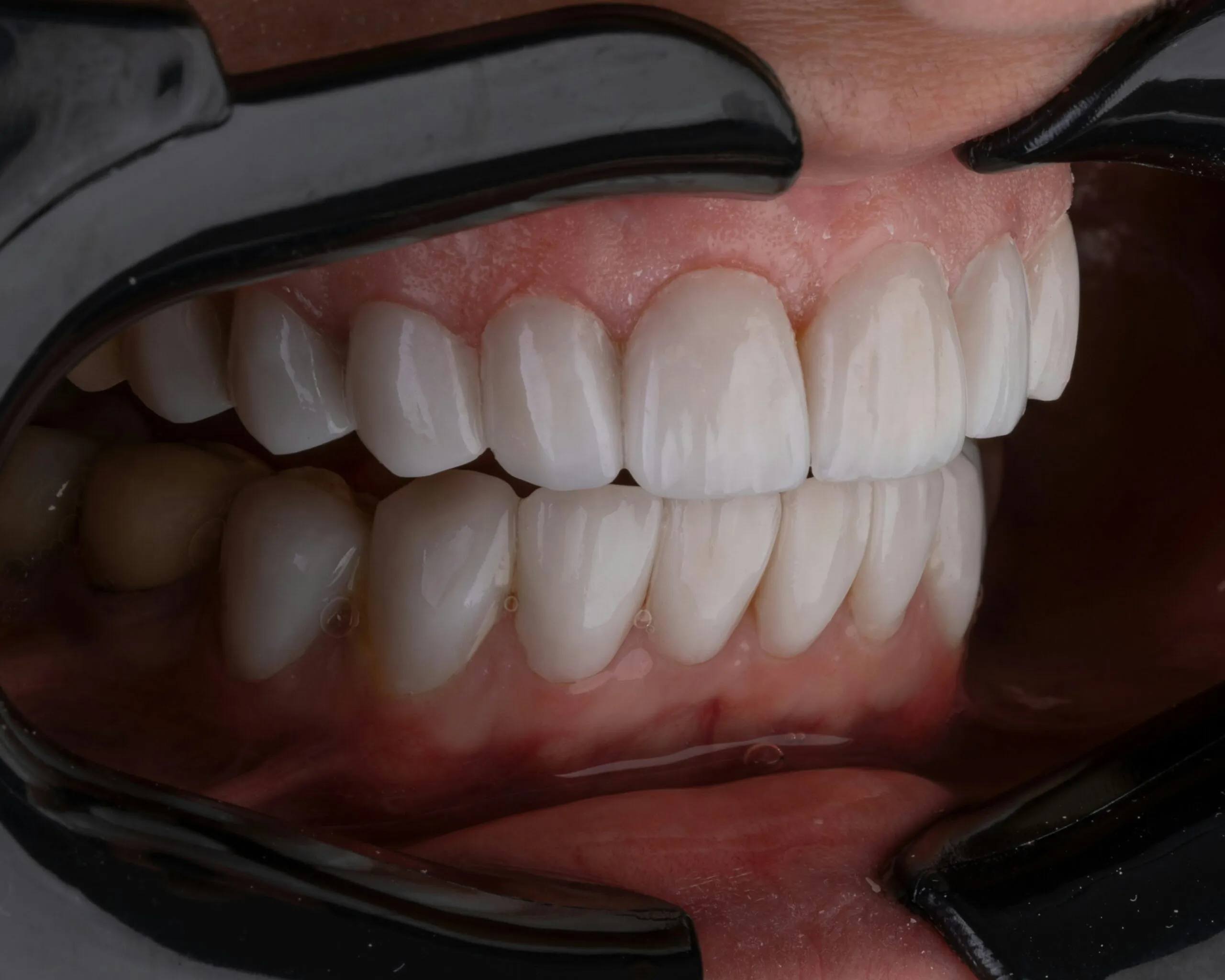
Signs worth attention
- gums that bleed when brushing or eating
- breath that does not improve after brushing
- receding gums, making teeth look longer
- sensitivity at the necks of the teeth
- a tooth that has become slightly mobile or changed position
Treatment
It starts with thorough removal of deposits, including those below the gum line in what are called pockets. Then we monitor how the tissue responds — in most patients the inflammation settles and pocket depths reduce. Advanced cases also need surgical steps.
What ultimately decides the outcome is not the treatment but the maintenance afterwards. For that reason we schedule reviews every three to six months rather than once a year.
Frequently asked questions
Can lost bone be regained?
Generally no. Treatment halts the process and stabilises the situation, but bone already lost does not rebuild on its own. Regenerative procedures are possible in selected cases. This is why presenting early matters so much.
My gums have receded and my teeth look longer. Can that be fixed?
First the cause is brought under control. For individual sites there are surgical techniques to cover an exposed root, but they only make sense once the inflammation is settled and hygiene is stable.
It runs in my family, so is there anything I can do?
Susceptibility is partly inherited, but the course of the disease is not fixed in advance. Regular removal of deposits, stopping smoking and controlled blood sugar change the outcome dramatically — even in patients with a marked family history.
Not sure what you need? You do not have to be.
Send us a photo and a few words. We will reply with an assessment, a treatment outline and an indicative quote — before you commit to anything.